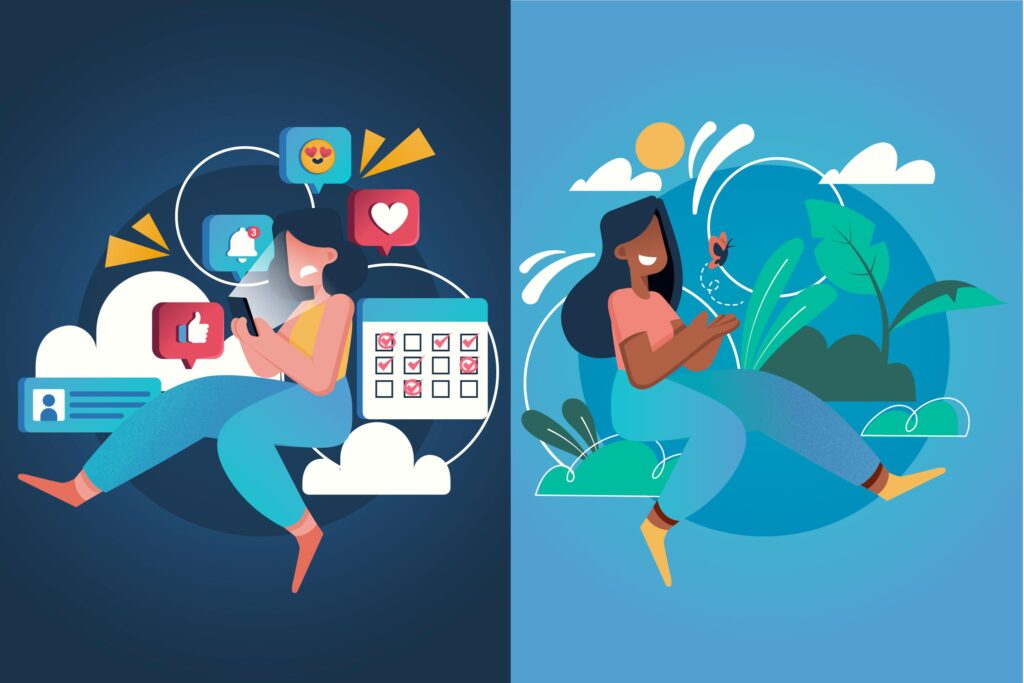
We live in an age where our phones buzz before our minds wake. The average professional checks their device over 150 times a day, and nearly 40% admit they feel anxious without it.
While technology fuels progress, its constant presence has blurred the line between productivity and exhaustion. The solution is not abandoning technology but reclaiming balance through a digital detox — a conscious pause to reset our mental and emotional systems.
The Cost of Constant Connectivity
Our digital dependence is reshaping our brains. Studies show that constant notifications fragment focus, lowering productivity by up to 40%. Multitasking, once seen as a strength, now correlates with cognitive fatigue and stress overload.
The result?
- Shorter attention spans
- Decline in creativity
- Impaired sleep patterns
- Increased anxiety and burnout
For professionals navigating high-demand careers, this constant connectivity silently erodes well-being.
What Is a Digital Detox?
A digital detox is a deliberate period of reduced or no screen usage — a reset for the brain. It can last an hour, a day, or an entire weekend, depending on your lifestyle.
The purpose is simple: to break the dopamine loop — the brain’s addiction to short bursts of digital stimulation.
Signs You Need a Digital Detox
- You check your phone within 5 minutes of waking.
- You feel “phantom vibrations.”
- You multitask across multiple screens but retain less.
- Your sleep feels shallow or interrupted.
- You feel uneasy during silence or boredom.
Recognizing these patterns is the first step toward balance.
Effective Strategies for a Digital Detox
- Set Tech-Free Zones: Keep devices out of bedrooms and dining areas.
- Schedule ‘Offline Hours’: Designate blocks of deep focus work without screens.
- Use Digital Wellbeing Tools: Apps like “Forest” and “Focus Mode” help limit screen time.
- Replace, Don’t Remove: Substitute scrolling with reading, journaling, or walking.
- Reclaim Real Connection: Schedule face-to-face interactions without devices nearby.
The Professional Advantage
A digital detox enhances strategic thinking and emotional regulation, both critical for leadership. When executives and teams disconnect regularly, they return with sharper focus, renewed creativity, and better interpersonal awareness.
Companies like Google and Microsoft now promote “No-Meeting Fridays” and digital mindfulness programs to improve productivity and morale.
Conclusion
A digital detox is not a rejection of technology — it’s a recalibration. In a hyperconnected world, the ability to disconnect intentionally is becoming the new professional superpower.
The future belongs to those who can use technology mindfully — not those used by it.