As the world races toward decarbonization, energy has become one of the most critical—and complex—leadership challenges of our time. Governments, corporations, and societies are all grappling with the same question: how can the global economy transition to cleaner energy without compromising reliability, affordability, and growth?
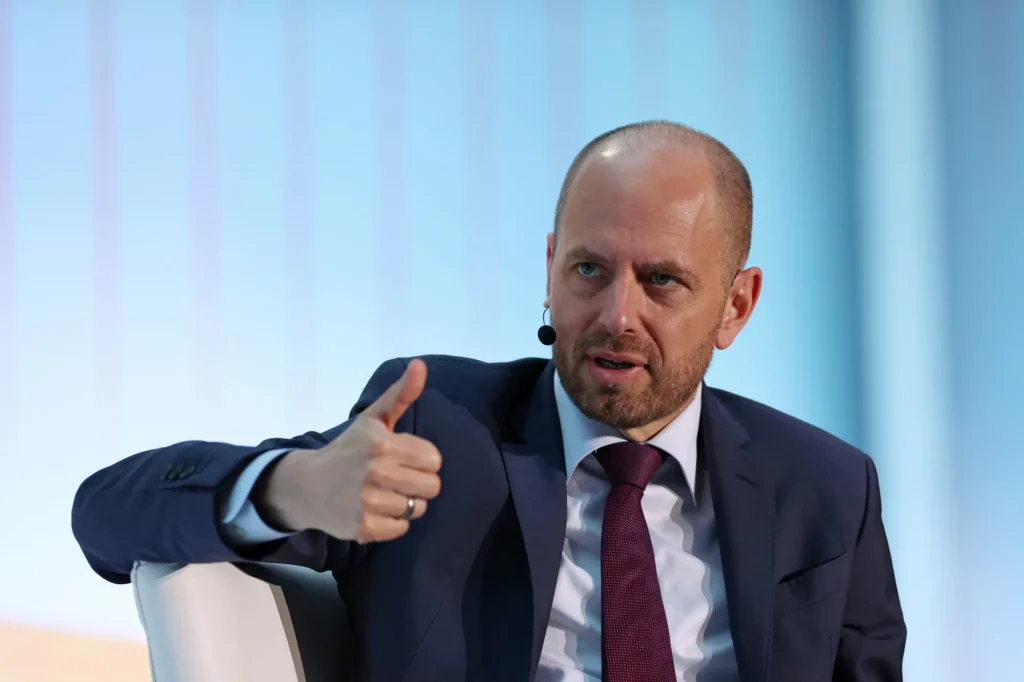
At the center of this transformation stands Christian Bruch, President and Chief Executive Officer of Siemens Energy. An engineer by training and a global executive by experience, Bruch is leading one of the world’s most important energy companies through a defining moment for the industry—and for the planet.
An Engineer’s Mindset at the Helm
Christian Bruch’s leadership is deeply shaped by his technical foundation. He holds a degree in mechanical engineering and a doctorate in engineering, a background that gives him a rigorous, systems-oriented approach to problem-solving—an essential quality in the energy sector.
Before becoming CEO of Siemens Energy, Bruch built a long career within the Siemens ecosystem, holding senior roles across energy, technology, and operations. His experience spans Europe, Asia, and North America, giving him firsthand exposure to diverse energy systems and regulatory environments.
When Siemens Energy was spun off as an independent company in 2020, Bruch was appointed CEO—tasked with guiding the organization through both operational independence and a rapidly evolving global energy landscape.
Leadership profile:
-
Siemens Energy – CEO biography: https://www.siemens-energy.com/global/en/company/about/management/christian-bruch.html
Leading a Global Energy Powerhouse
Siemens Energy operates across the full energy value chain—from power generation and transmission to industrial decarbonization and hydrogen technologies. With operations in more than 90 countries, the company plays a pivotal role in keeping lights on while accelerating the shift to low-carbon energy.
Under Bruch’s leadership, Siemens Energy has focused on:
-
Expanding renewable energy infrastructure
-
Strengthening grid resilience and transmission systems
-
Advancing hydrogen and sustainable fuels
-
Supporting industrial clients in reducing emissions
Unlike tech or financial services, energy transformation cannot happen overnight. Bruch has repeatedly emphasized the importance of pragmatism alongside ambition—balancing climate goals with the realities of energy security and economic stability.
Company overview:
-
Siemens Energy global operations: https://www.siemens-energy.com/global/en.html
Navigating Crisis with Long-Term Vision
Bruch’s tenure has not been without challenges. The global energy sector has faced supply chain disruptions, geopolitical tensions, fluctuating commodity prices, and the urgent need to scale renewables faster than ever before.
One of the most visible tests of his leadership has been navigating operational and financial pressures within Siemens Energy’s wind power business, Siemens Gamesa. Rather than short-term fixes, Bruch has taken a long-horizon approach, focusing on restructuring, quality improvements, and strategic realignment.
His leadership during periods of uncertainty has underscored a core belief: energy transformation is a marathon, not a sprint.
A Global Voice on the Energy Transition
Christian Bruch is a regular participant in international forums such as the World Economic Forum, where he has spoken extensively about the need for collaboration between governments, industry, and financial institutions.
He has consistently highlighted three critical pillars for a successful energy transition:
-
Technology innovation – scaling renewables, storage, and hydrogen
-
Infrastructure investment – modern grids and cross-border connectivity
-
Policy alignment – stable, long-term regulatory frameworks
Bruch argues that without coordinated action across these areas, the transition risks becoming fragmented and inequitable—particularly for emerging markets.
Thought leadership:
-
World Economic Forum author page: https://www.weforum.org/people/christian-bruch
Sustainability with Industrial Reality
While sustainability is central to Siemens Energy’s mission, Bruch brings a distinctive perspective shaped by industrial realities. He acknowledges that many industries—steel, chemicals, aviation—cannot decarbonize without massive technological breakthroughs and infrastructure upgrades.
Under his leadership, Siemens Energy has invested heavily in:
-
Green hydrogen solutions
-
Carbon reduction technologies
-
Energy efficiency for heavy industry
This approach positions the company not just as a power producer, but as an enabler of industrial decarbonization, helping clients transition without disrupting economic output.
Related reading:
-
Siemens Energy on hydrogen: https://www.siemens-energy.com/global/en/offerings/renewable-energy/hydrogen-solutions.html
Leadership Style: Calm, Technical, and Purpose-Driven
Christian Bruch’s leadership style contrasts with the more charismatic archetype often seen in global CEOs. He is widely described as measured, analytical, and deeply informed—a leader who relies on data, engineering expertise, and long-term planning.
Yet his communication consistently returns to a broader purpose: ensuring that the energy transition benefits society as a whole. He has emphasized that affordability, reliability, and sustainability must move forward together—not in isolation.
This balance between technical rigor and societal responsibility defines Bruch’s leadership philosophy.
Lessons for Leaders Across Industries
Christian Bruch’s journey offers valuable insights for leaders beyond the energy sector:
-
Technical expertise matters in complex, high-impact industries.
-
Long-term vision is essential when transformation spans decades.
-
Sustainability must be practical to be scalable.
-
Leadership during uncertainty requires steadiness, not spectacle.
His approach reflects a broader shift toward leadership grounded in competence, collaboration, and credibility.
Conclusion: Engineering the Future of Energy Leadership
As the world confronts climate change and rising energy demand simultaneously, leaders like Christian Bruch play a decisive role in shaping outcomes. His work at Siemens Energy demonstrates that the energy transition is not just an environmental challenge—it is an engineering, economic, and leadership challenge of unprecedented scale.
By combining technical expertise with global collaboration and long-term thinking, Bruch is helping to chart a path toward a more sustainable and resilient energy future.
In doing so, he exemplifies a new model of leadership—one where responsibility, realism, and innovation converge to power progress.